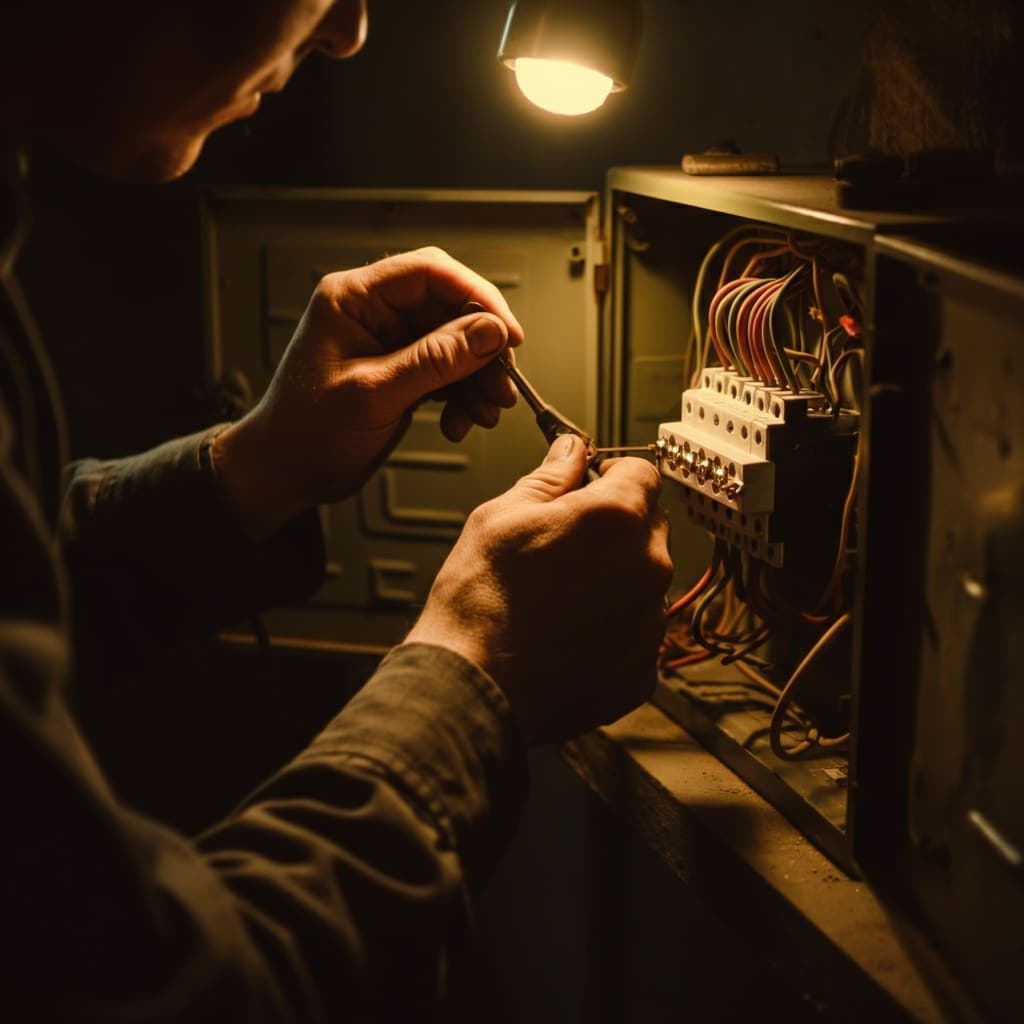
You plug in the vacuum, and the living room lights immediately start a rhythmic flutter. It is tempting to dismiss this annoyance as just an old bulb, but according to home inspection data, it is frequently a symptom of loose wiring. Your home’s electrical network functions exactly like a central nervous system, using these small glitches to signal a larger internal struggle. Flickering bulbs or a warm wall plug are classic signs of faulty home wiring that demand immediate attention.
Ignoring those warnings can quickly turn a minor repair into a sudden crisis. Fire safety experts consistently emphasize that sparks equal danger, meaning a delayed response allows poor connections to overheat behind your drywall. Because of these hidden risks, deciding to find an electrician near me is a high-stakes safety decision rather than a simple weekend convenience. When an overloaded circuit finally gives out, you will likely find yourself frantically searching for emergency electrical repair services instead of planning a scheduled upgrade.
Protecting your property requires bringing in a professional who can safely interpret what your house is trying to tell you. A reliable hire always rests on three core pillars: active licensing, comprehensive insurance, and strict code compliance. Verifying these essential credentials before anyone touches your panel guarantees cost transparency and enforces proper safety protocols, allowing you to confidently address warning signs without risking your safety or your wallet.
Why That Rattling Bathroom Fan Is More Than Just a Noise
flipping the bathroom switch shouldn't sound like starting a struggling lawnmower. While a simple dusting might solve a minor squeak, mechanical failures mean you need to search for qualified exhaust fan repair near me rather than trying a DIY fix. You need to act fast if you notice these warning signs:
- A harsh grinding or humming noise
- Blades that hesitate or start very slowly
- A faint burning smell when the unit runs
Ignoring those symptoms can turn a cheap fix into a dangerous fire hazard behind your drywall. When internal parts get stuck—a problem professionals call a motor seizure—the machine keeps fighting to force the blades to spin. This intense effort creates a massive "electrical draw," similar to pressing the gas pedal to the floor while your car is parked against a brick wall. The hidden wiring quickly overheats under this heavy pressure, which is why tracking down a ceiling fan repair shop near me is a critical safety step.
Swapping out a ruined fixture isn't as simple as plugging in a new appliance. A professional fan repair electrician near me will ensure your home's electrical circuit can safely handle the "weight" or load of the new motor without tripping your breakers. Matching the right professional to this safety check requires understanding the distinct roles between a Master Electrician and a Journeyman.
Master Electrician vs. Journeyman: Choosing the Right 'Supervision Level'
When you start searching for licensed residential electrical contractors, you will immediately notice a strict professional hierarchy. Think of a Master Electrician as the architect who designs your home's system, while a Journeyman is the highly skilled builder who safely installs it. Earning that Master title requires over 8,000 hours of field experience, ensuring they can solve complex, high-stakes problems.
For most everyday household fixes, a Journeyman is exactly who you need, provided they operate under a Master's supervision for legal liability. When weighing a master electrician vs journeyman for your specific project, match the "weight" of the job to the title:
- Journeyman Tasks: Swapping faulty ceiling fans, fixing dead outlets, or wiring a standard light fixture.
- Master Tasks: Upgrading a main electrical panel, pulling local city permits, or designing a whole-house rewiring plan.
Protecting your investment requires more than simply taking a repairman at their word. Because the Journeyman relies on the Master's legal umbrella, confirming these credentials ensures you are not held legally or financially liable if a wire accidentally shorts out. Before any tools come out, you must know how to verify electrician license status to establish your ultimate paperwork and insurance shield.
The Paperwork Shield: How to Verify License Status and Insurance in 5 Minutes
Trusting a friendly handshake instead of verifying paperwork is a quick way to inherit massive legal liability. If an unverified worker sparks a wall fire, your homeowner's policy might refuse the claim, leaving you to pay the bill. Knowing how to verify electrician license status takes less than five minutes through your state’s official contractor board website. Just type in the professional's name or license number to instantly confirm their credential is active and clear of violations.
Beyond an active license, you must demand the ultimate financial safety net: insurance and surety bonds. People often confuse these terms, but they protect you from entirely different disasters. General liability insurance covers physical accidents, like a heavy tool shattering your expensive floor tile. In contrast, a surety bond acts as a completion guarantee, protecting your wallet if the contractor vanishes with your deposit. Searching exclusively for bonded and insured electrical companies ensures you are shielded from both property damage and financial fraud.
Securing this physical proof of protection should always headline your checklist of what to ask before hiring an electrician. A reputable professional will gladly hand over copies of these documents before ever touching a breaker box. With your legal shields firmly in place, you can confidently review average hourly rates and electrical panel upgrade costs.
Decoding the Quote: Average Hourly Rates and Electrical Panel Upgrade Costs
Staring at an electrical quote can feel like reading a foreign language, especially when the total catches you off guard. Most professionals charge average hourly rates for electricians ranging from $50 to $150, largely depending on their experience level. You should also expect a standard "trip charge" or diagnostic fee just to assess the problem, which simply covers their travel time and initial troubleshooting.
The steepest numbers usually appear when your home's "engine" needs a complete overhaul. Electrical panel upgrade costs typically run between ₹1,500 and ₹4,000, a major project known in the industry as a "service change." While expensive, replacing an outdated or undersized panel is a critical investment in your family's fire safety and your home's future resale value.
Typical pricing guidelines to keep in mind:
- Simple fixture or outlet repair: ₹100–₹250
- Ceiling fan installation: ₹150–₹350
- Full electrical panel upgrade: ₹1,500–₹4,000
Knowing what to ask before hiring an electrician helps clarify why these prices fluctuate, especially if a pro suggests adding "dedicated circuits." Think of a dedicated circuit as a VIP lane on a highway; heavy-duty appliances like refrigerators or EV chargers need their own private lane so they don't cause a traffic jam and overwhelm your home's wiring.
Armed with a clear understanding of these costs, you can confidently review bids without getting sticker shock. However, if your current system is already crying out for help by constantly shutting off your appliances, it is time to investigate the root cause of those frequent circuit breaker trips.
Troubleshooting the 'Trip': Why Your Circuit Breaker Frequently Cuts Power
You plug in the vacuum, and suddenly the room goes dark. A circuit breaker tripping frequently isn't a broken switch; it's a vital safety feature doing its job to prevent a fire. Think of electricity like water flowing through a hose. A circuit overload happens when you run a microwave and toaster simultaneously, demanding too much "water" at once. A short circuit is much more dangerous—it acts like a burst pipe where power escapes its safe, intended path.
Before paying a diagnostic fee, you can safely check if you just overloaded the system:
- Unplug: Remove heavy appliances from the dead area to clear the traffic jam.
- Reset: Push the tripped breaker firmly to "Off," then click it back to "On."
- Test: Plug devices in one by one to see if the power holds.
If the power stays on but you are still troubleshooting flickering lights in house, do not ignore the warning. Persistent dimming is among the most common signs of faulty home wiring, usually meaning a connection has wiggled loose. A licensed professional must perform a "torque check" to safely tighten those panel wires. Securing this foundational wiring is non-negotiable before upgrading your property with continuous-draw EV chargers or modern smart home technology.
Smart Homes and EV Chargers: Why New Technology Needs Old-School Expertise
Bringing home a new electric vehicle feels like stepping into the future, but plugging it directly into a standard garage outlet is a risky gamble. Unlike a refrigerator that cycles on and off, an EV charger pulls a massive, steady stream of power for hours, known as a "continuous draw." Before a professional connects one, they must perform a load calculation to ensure your home’s electrical panel can handle this heavy new burden without causing an overload.
Automated lighting presents a similar hidden hurdle for older properties. When hiring professional residential smart home installation services, you might discover your vintage walls lack a "neutral wire." This specific wire acts as a vital return path that keeps smart switches powered even when the lightbulb itself is off, meaning classic homes frequently require fresh wiring to make modern technology function.
To safely support these new demands, you must factor in potential electrical panel upgrade costs rather than cutting corners. Strict National Electrical Code compliance acts as your shield, guaranteeing your continuous-draw gadgets won't spark a devastating house fire. Securing this professional, code-compliant work relies heavily on local oversight and municipal building requirements.
The Permit Paradox: Why Local Building Requirements Save You from Insurance Headaches
Filing paperwork with your city might feel like unnecessary red tape, but it actually serves as your ultimate protection policy. Navigating local building permit requirements creates a documented paper trail proving your home’s wiring is safe. If you skip this step to save a few dollars, that undocumented "fix" can easily derail a future home sale when a buyer's inspector finds it.
The financial risks of DIY electrical work vs professional services become painfully clear if a fire occurs, as insurance companies often deny claims tied to unpermitted wiring. To protect your wallet and your family, a city inspector acts as your independent quality-control agent, verifying strict National Electrical Code compliance. You must always pull a permit for:
- Main electrical panel replacements
- Installation of brand-new dedicated circuits
- Major room renovations and additions
This final third-party review guarantees that nobody took dangerous shortcuts behind your drywall. Official oversight protects your largest investment, empowering you to execute a confident safety action plan from initial emergency repair to final inspection.
Your Safety Action Plan: From Emergency Repair to Final Inspection
You no longer have to cross your fingers when dealing with home power issues. Whether you are planning a simple panel upgrade or need immediate help from emergency electrical repair services, you now possess the knowledge to vet professionals confidently. You aren't just hiring a worker; you are securing your home.
When evaluating your "Find an Electrician Near Me" search results, hold your ground. Knowing exactly what to ask before hiring an electrician is your best defense against uncertified handymen. Keep this 'Ready-to-Hire' Checklist handy before you sign off on any quote:
- Active License #
- Insurance Cert
- Permit Agreement
- Written Warranty
Apply this standard to your next project to maintain full control over the hiring process. Prioritizing safety over the lowest possible price isn't an extra expense—it’s the best investment a homeowner can make in their family's long-term wellbeing, protecting your property and ensuring the true peace of mind that comes from a professional job done right.